Solvents
 by
by Introduction A solvent is a substance that dissolves a solute (a solid, liquid, or gas) to form a solution. It is usually present in a …

Stay Ahead in Pharmacy
Introduction A solvent is a substance that dissolves a solute (a solid, liquid, or gas) to form a solution. It is usually present in a …
Introduction Non-aqueous titration is a specialized analytical technique used for the titration of weak acids and weak bases that do not dissolve or ionize well …
Introduction Sodium chloride (NaCl) is crucial in various fields such as pharmaceuticals, food, water analysis, and chemical industries. Its estimation is commonly performed using precipitation …
Introduction Fajan’s Method is a precipitation titration technique that uses adsorption indicators to detect the endpoint. Use it primarily for the determination of halide ions …
Introduction The Modified Volhard’s Method is an adaptation of the classical Volhard’s Method, used for the determination of chloride (Cl⁻), bromide (Br⁻), and iodide (I⁻) …
Introduction Volhard’s method is a back titration technique used for the determination of chloride (Cl⁻), bromide (Br⁻), and iodide (I⁻) ions. It employs silver nitrate …
Introduction Mohr’s method is a classical argentometric precipitation titration used for the quantitative determination of chloride (Cl⁻) and bromide (Br⁻) ions using silver nitrate (AgNO₃) …
Introduction Precipitation titrations are a type of volumetric analysis in which the reaction between the analyte and the titrant results in the formation of an …
Introduction Diazotization titration is a redox titration method used primarily for the quantitative estimation of primary aromatic amines by converting them into diazonium salts using …
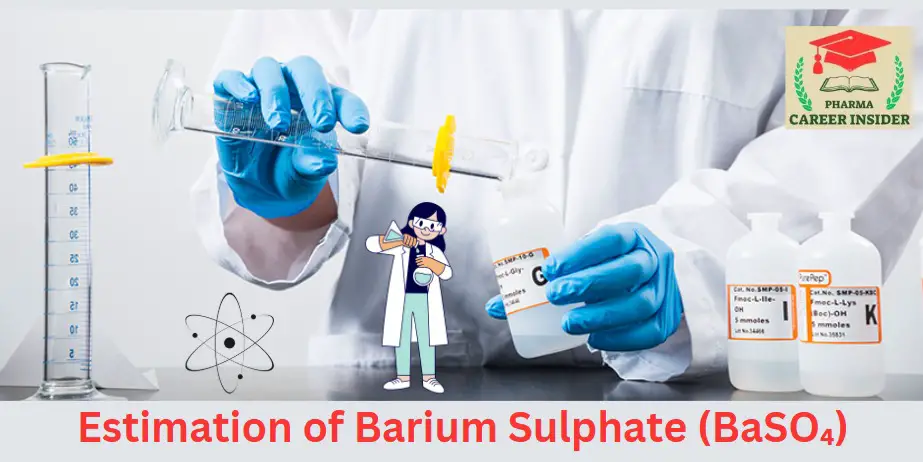
Introduction Gravimetric analysis is one of the most accurate and precise quantitative analytical techniques. Estimating barium sulfate (BaSO₄) is a classic example of this method, …