

 by
by Leucovorin, also known as folinic acid, is an important medication widely used in modern pharmacotherapy, particularly in cancer chemotherapy and the management of drug-induced folate deficiency. The drug plays a crucial role in methotrexate rescue therapy, where it protects normal cells from the toxic effects of high-dose methotrexate. Understanding the mechanism of action of leucovorin is essential for pharmacists, clinicians, and healthcare students because it explains how this medication restores folate metabolism without interfering with the anticancer effects of chemotherapy drugs.
In addition to its traditional uses in oncology, leucovorin has recently attracted attention due to new regulatory developments and ongoing research in neurological and metabolic disorders. This article provides a comprehensive overview of leucovorin, including its pharmacology, clinical applications, safety profile, and recent regulatory updates.
What is Leucovorin?
Leucovorin is a reduced form of folic acid, also known as folinic acid or 5-formyl tetrahydrofolate. It belongs to the class of folate analogs, which are compounds structurally related to folic acid but capable of bypassing certain metabolic steps in the folate pathway.
Unlike folic acid, leucovorin does not require activation by the enzyme dihydrofolate reductase (DHFR) to become biologically active. This property allows the drug to replenish folate pools in the body even when DHFR is inhibited by medications such as methotrexate.
Leucovorin is commonly used in:
- Methotrexate toxicity management
- Combination chemotherapy regimens
- Treatment of certain types of anemia
- Prevention of toxicity from folate-antagonist drugs
Because of these therapeutic roles, leucovorin has become an essential supportive medication in oncology and clinical pharmacology.
Chemical Structure and Pharmacological Classification
Chemically, leucovorin is a 5-formyl derivative of tetrahydrofolic acid, which is a biologically active form of vitamin B9.
Chemical characteristics
- Chemical name: Calcium folinate (folinic acid calcium salt)
- Molecular class: Reduced folate derivative
- Pharmacological class: Folate analog / Antidote for folate antagonist toxicity
Leucovorin functions as a metabolically active form of folate, allowing the body to synthesize nucleotides and amino acids required for DNA synthesis and cellular growth.
From a pharmacological perspective, leucovorin serves two main purposes:
- Rescue therapy after folate antagonist drugs
- Potentiation of certain chemotherapy agents, especially fluorouracil
These dual roles make leucovorin unique among folate-related drugs.
Mechanism of Action of Leucovorin
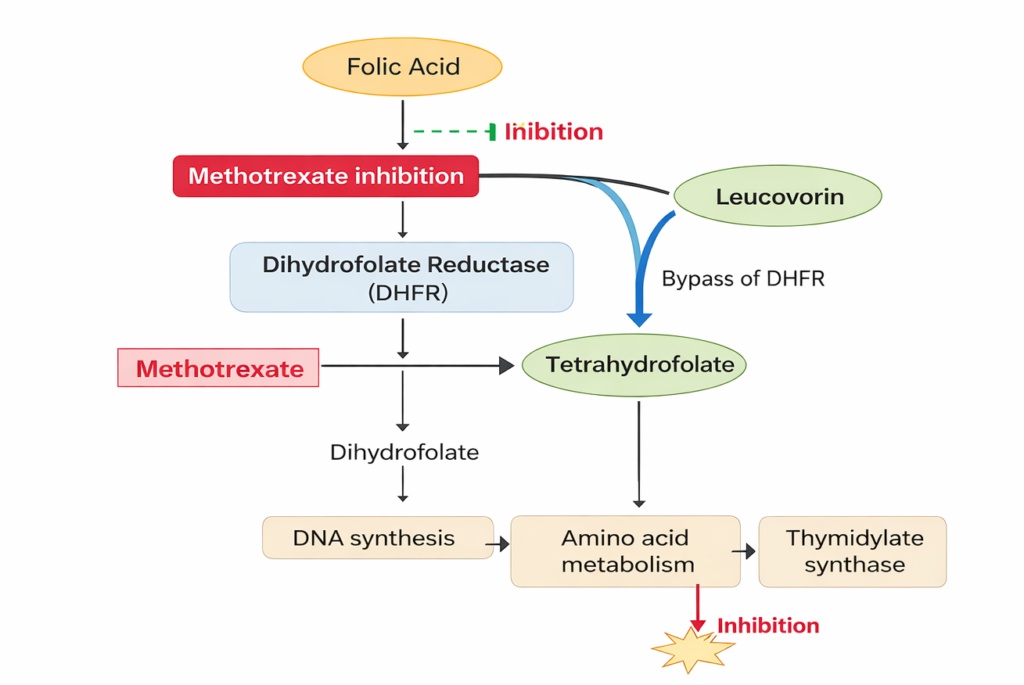
The mechanism of action of leucovorin is based on its ability to restore the tetrahydrofolate pool in cells without requiring reduction by dihydrofolate reductase.
Normally, folic acid must be converted into tetrahydrofolate by DHFR before it can participate in metabolic reactions. However, certain chemotherapy drugs, particularly methotrexate, inhibit DHFR and block this conversion.
Leucovorin bypasses this inhibition because it is already in the reduced form of folate. Once administered, it is converted into tetrahydrofolate derivatives, which participate in:
- DNA synthesis
- RNA production
- Amino acid metabolism
As a result, leucovorin restores normal cellular metabolism in healthy tissues while allowing chemotherapy drugs to continue targeting rapidly dividing cancer cells.
Leucovorin in Methotrexate Rescue Therapy
One of the most important clinical uses of leucovorin is methotrexate rescue therapy. Methotrexate is a widely used chemotherapy drug that inhibits the enzyme dihydrofolate reductase, leading to depletion of tetrahydrofolate and inhibition of DNA synthesis. While this effect is beneficial for destroying cancer cells, it can also damage normal cells, especially those in:
- Bone marrow
- Gastrointestinal tract
- Skin
To prevent severe toxicity, leucovorin is administered after high-dose methotrexate therapy.
How rescue therapy works
- Methotrexate inhibits folate metabolism in both cancer and normal cells.
- Leucovorin is given after a specific time interval.
- The drug restores folate metabolism in normal tissues.
- Cancer cells remain affected due to drug retention and metabolic differences.
This approach allows clinicians to administer higher and more effective doses of methotrexate while minimizing toxicity.
Leucovorin in Combination Chemotherapy (5-Fluorouracil)
Leucovorin is also widely used in combination with 5-fluorouracil (5-FU), particularly in the treatment of colorectal cancer.
Unlike methotrexate rescue therapy, where leucovorin protects cells, in this case, it enhances the effectiveness of chemotherapy.
Mechanism in combination therapy
5-Fluorouracil works by inhibiting the enzyme thymidylate synthase, which is essential for DNA synthesis.
Leucovorin enhances this inhibition by stabilizing the binding between:
- 5-FU metabolites
- Thymidylate synthase
- Folate cofactors
This stabilization leads to stronger and prolonged inhibition of DNA synthesis in cancer cells, improving the anticancer effect.
Because of this synergistic interaction, leucovorin is a standard component of many chemotherapy regimens such as:
- FOLFOX regimen
- FOLFIRI regimen
Pharmacokinetics of Leucovorin
Understanding the pharmacokinetics of leucovorin is important for determining appropriate dosing and administration.
- Absorption: Leucovorin can be administered orally, intravenously, or intramuscularly. Oral absorption is generally rapid, although bioavailability may vary at higher doses.
- Distribution: After absorption, leucovorin is distributed throughout body tissues, including the liver and kidneys. It can cross cell membranes via active transport.
- Metabolism: Leucovorin is metabolized primarily in the liver to active reduced folate derivatives, including 5-methyltetrahydrofolate.
- Excretion: The drug and its metabolites are mainly excreted through the kidneys via urine.
Clinical Uses of Leucovorin
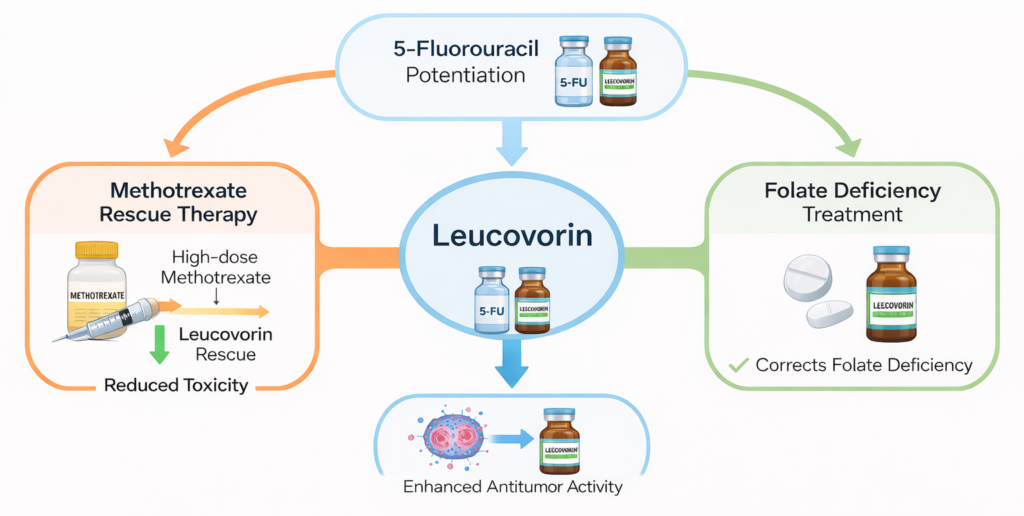
Leucovorin is widely used in oncology for methotrexate rescue therapy and to enhance the anticancer activity of 5-fluorouracil. Leucovorin has several important therapeutic applications in clinical practice.
- Methotrexate toxicity prevention: The most common indication is protection against the toxic effects of high-dose methotrexate therapy.
- Combination chemotherapy: Leucovorin is used with 5-fluorouracil in the treatment of colorectal cancer and other gastrointestinal malignancies.
- Folate deficiency anemia: In certain cases, leucovorin may be used to treat anemia caused by folate deficiency.
- Antidote for folate antagonist drugs: It is used to counteract toxicity caused by medications such as pyrimethamine and trimethoprim.
- Rare metabolic disorders: Leucovorin has also been investigated for the treatment of certain neurological disorders involving impaired folate transport in the brain.
Recent FDA Approval and Why Leucovorin Is Trending
Leucovorin (folinic acid) has recently gained widespread attention in medical research and online health discussions following a recent approval by the U.S. Food and Drug Administration (FDA). In March 2026, the FDA approved leucovorin tablets for the treatment of FOLR1-related cerebral folate deficiency, a rare neurological disorder characterized by impaired transport of folate into the brain. This condition leads to extremely low folate levels in the central nervous system and may cause symptoms such as seizures, developmental delay, and neurological dysfunction. Because leucovorin is an active reduced form of folic acid, it can bypass certain metabolic steps in the folate pathway and restore essential folate availability in affected tissues.
The FDA decision was supported by clinical evidence from published studies, patient case reports, and observational research demonstrating neurological improvement in individuals treated with folinic acid therapy. Due to the extreme rarity of cerebral folate deficiency, large randomized trials are difficult to conduct, so regulators evaluated accumulated clinical and mechanistic data. Following the announcement, leucovorin rapidly became a trending drug in medical news and online search platforms, as researchers and healthcare professionals discussed its therapeutic role in rare neurological disorders linked to folate metabolism. However, regulatory agencies clarified that the current approval specifically applies to cerebral folate deficiency and not to autism broadly, although ongoing research continues to explore potential neurological applications.
Leucovorin and Autism: Current Scientific Evidence
In recent years, researchers have explored the possibility that leucovorin may benefit certain individuals with autism spectrum disorder who have abnormalities in folate metabolism.
Some studies suggest that children with cerebral folate deficiency may respond to folinic acid therapy.
However, it is important to note that:
- Evidence is still limited
- The treatment is not universally recommended
- More clinical trials are needed
Current medical guidelines emphasize that leucovorin should only be used under professional supervision and for approved medical indications.
Dosage and Administration
Leucovorin is available in several formulations:
- Oral tablets
- Intravenous injection
- Intramuscular injection
The dosage depends on the clinical indication.
- Methotrexate rescue: Doses are typically administered every 6 hours after methotrexate therapy until drug levels decrease to safe concentrations.
- Combination chemotherapy: In colorectal cancer treatment, leucovorin is administered before or together with 5-fluorouracil to enhance its activity.
Because dosing protocols can vary significantly, treatment should always be guided by healthcare professionals.
Side Effects and Safety Profile
Leucovorin is generally considered a safe medication with a favorable safety profile.
However, some patients may experience side effects, including:
- Allergic reactions
- Rash or itching
- Fever or chills
- Gastrointestinal discomfort
Severe adverse reactions are rare but can occur, particularly when the drug is used in combination with chemotherapy.
Drug Interactions
Leucovorin may interact with certain medications.
Important interactions include:
- Phenytoin: Leucovorin may reduce serum levels of phenytoin, potentially increasing the risk of seizures.
- Trimethoprim and Pyrimethamine: These drugs are folate antagonists, and leucovorin may reduce their therapeutic effects.
- Methotrexate: Although leucovorin protects normal tissues from toxicity, improper timing of administration may interfere with methotrexate efficacy.
Careful monitoring is required when these drugs are used together.
Advantages of Leucovorin Over Folic Acid
Leucovorin offers several advantages compared with ordinary folic acid supplementation
- No activation required: Unlike folic acid, leucovorin does not require reduction by dihydrofolate reductase to become active.
- Rapid therapeutic effect: Because it bypasses metabolic activation, leucovorin can rapidly restore folate metabolism in cells.
- Effective rescue therapy: Leucovorin is particularly useful in situations where DHFR is inhibited by drugs such as methotrexate.
These advantages make leucovorin an important therapeutic agent in oncology and toxicology.
Future Perspectives in Clinical Research
Research on leucovorin continues to expand in several areas.
Scientists are exploring its potential role in:
- Neurological disorders related to folate metabolism
- Personalized cancer therapy
- Pediatric metabolic diseases
- Novel chemotherapy combinations
Future clinical trials may help clarify additional therapeutic applications and optimize dosing strategies.
Frequently Asked Questions (FAQs)
Q1. What is leucovorin used for?
Leucovorin is used to reduce methotrexate toxicity, enhance the effectiveness of 5-fluorouracil chemotherapy, and treat certain folate deficiency conditions.
Q2. Is leucovorin the same as folic acid?
No. Leucovorin is a reduced form of folic acid that does not require activation by dihydrofolate reductase.
Q3. Why is leucovorin used with methotrexate?
It protects normal cells from the toxic effects of methotrexate while allowing the drug to maintain its anticancer activity.
Q4. Is leucovorin used to treat autism?
Leucovorin has been studied for certain metabolic abnormalities related to autism, but more research is needed before it becomes a standard treatment
Q5. What are the side effects of leucovorin?
Common side effects include allergic reactions, rash, fever, and gastrointestinal discomfort.