Hemoglobin: Definition, Functions, Formation
 by
by Hemoglobin, responsible for transporting oxygen from the lungs to body tissues and carrying carbon dioxide back to the lungs for exhalation, is a protein found …

Stay Ahead in Pharmacy
Hemoglobin, responsible for transporting oxygen from the lungs to body tissues and carrying carbon dioxide back to the lungs for exhalation, is a protein found …
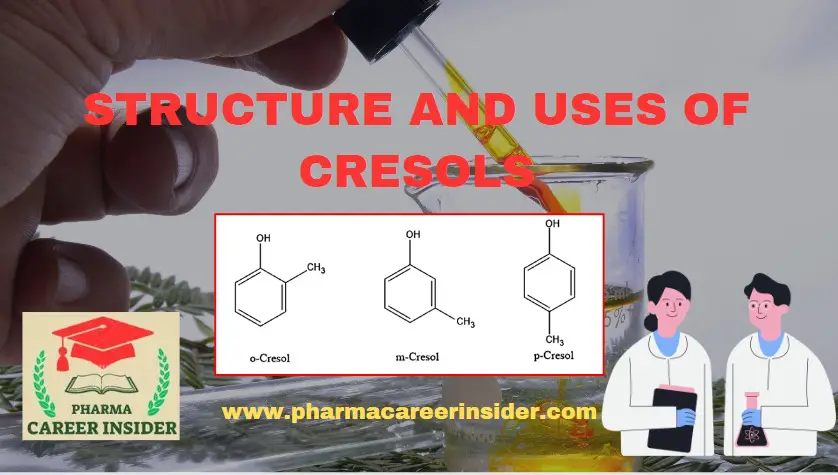
Cresols, also known as methylphenols, are a group of organic compounds that are phenol derivatives. They have the general formula (C7H8O) and exist in three …
Hemopoiesis, also known as hematopoiesis, is the blood cell formation process in the bone marrow. It is a critical physiological process that produces all the …
Blood is a vital connective tissue in the human body with many functions. It consists of several components, each crucial in maintaining homeostasis and overall …
Phenol, also known as carbolic acid, has various applications across different industries due to its versatile properties. Some common uses of phenol include: 1. Antiseptic …
Body fluids are essential for the proper functioning of the human body. They play numerous critical roles in maintaining homeostasis, transporting nutrients and waste products, …
(A). Reactions of -OH group: 1. Formation of Salts: Phenol is acidic. It reacts with sodium hydroxide or sodium metal to form salts. 2. Reaction …
Joint movements, also known as joint actions or articulations, refer to the various ways in which bones interact and move at the points where they …
A joint, also known as an articulation, is a structure in the body where two or more bones meet and interact. Joints play a crucial …
The neuromuscular junction (NMJ) is a specialized synapse or junction between a motor neuron and a muscle fiber (muscle cell). It is a crucial component …