 by
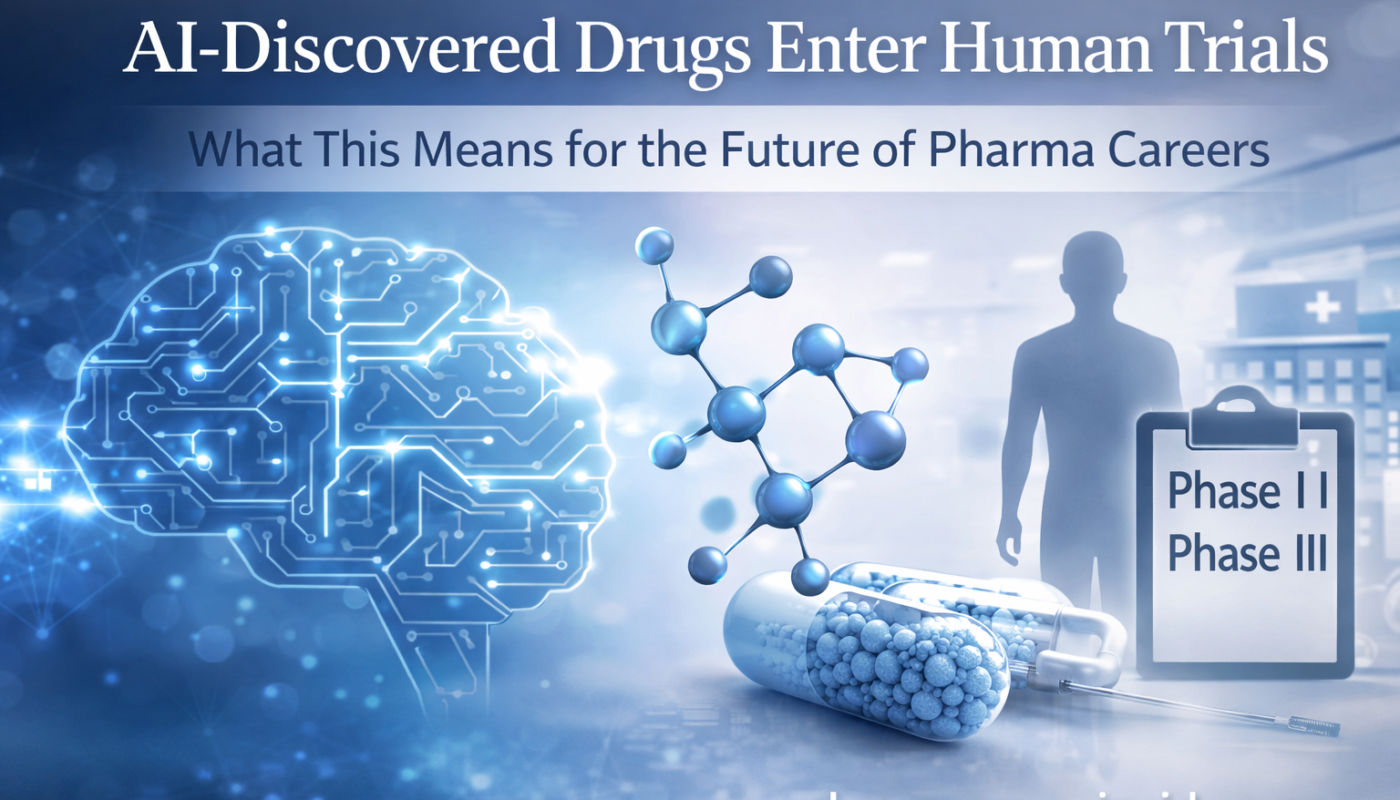
by For many years, drug discovery followed the same difficult path: long timelines, high costs, and frequent failures. Thousands of compounds were tested in laboratories, yet only a few ever reached patients. Today, this process is changing. Artificial Intelligence (AI) is helping scientists understand diseases better, identify promising drug candidates faster, and reduce early-stage failures. Recently, several AI-discovered drug candidates have entered human clinical trials, showing that AI is no longer limited to research papers or computer models—it is now influencing real medicines. This change matters not only for patients, but also for pharma students, researchers, and professionals who want to build future-ready careers.
This article explains what AI-discovered drugs are, how they reach human trials, and how this shift is quietly reshaping pharmaceutical careers.
What are AI-Discovered Drugs?
AI-discovered drugs are medicines whose discovery or early development stages are guided by artificial intelligence systems.
In traditional drug discovery:
- Scientists screen compounds one by one
- Experiments take years
- Many candidates fail late
With AI:
- Large biological and chemical datasets are analyzed together
- Patterns that humans cannot easily see are identified
- Promising molecules are selected early
AI does not replace scientists. Instead, it supports decision-making by reducing uncertainty and helping researchers focus on better options.
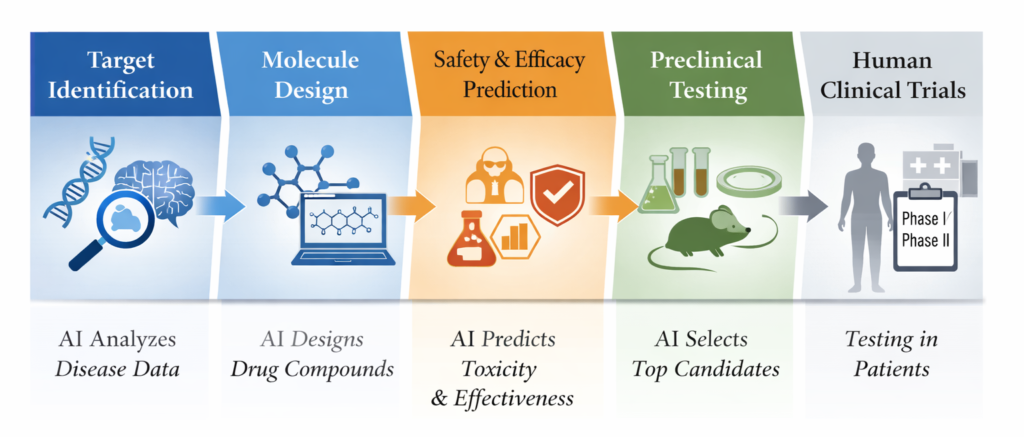
How AI Supports Drug Discovery
AI contributes at different stages of drug development. Understanding this helps explain why pharma roles are evolving.
1. Understanding the Disease: AI analyzes genetic, molecular, and clinical data to understand how a disease works. This helps researchers identify biological targets that are more likely to respond to treatment.
2. Designing Better Molecules: AI systems can design or modify chemical structures and predict how they may interact with disease targets. This reduces unnecessary lab experiments.
3. Predicting Safety Risks Early: Many drugs fail due to toxicity. AI models help predict potential safety issues before human testing begins, improving early decision-making.
4. Selecting the Best Candidates: Instead of moving many weak candidates forward, AI helps shortlist the strongest options for laboratory and animal studies.
When AI-Discovered Drugs Reach Human Trials
Human clinical trials are a critical step. They confirm whether a drug that looks promising on a computer and in labs is safe and effective in real people.
The entry of AI-discovered drugs into Phase I and Phase II trials shows that AI-guided research can meet the same scientific and safety standards as traditional methods.
These trials focus on conditions such as:
- Cancer
- Rare genetic disorders
- Immune-related diseases
- Metabolic and neurological conditions
Health authorities like the FDA and the European Medicines Agency review these drugs with the same level of scrutiny as any other medicine. AI does not reduce regulatory requirements. Safety, quality, and evidence remain essential.
Why this Moment is Important
The movement of AI-discovered drugs into human trials proves three important points:
- AI predictions can translate into real biological outcomes
- Drug discovery timelines can be shortened without compromising safety
- Research teams can make better early decisions
This is a practical shift, not a theoretical one.
How AI is Changing the Pharmaceutical Industry
AI is improving decision-making across pharma development.
- Faster Early Research: Time spent identifying viable candidates is significantly reduced.
- Better Use of Resources: Companies can focus funding and effort on stronger candidates.
- Improved Research Confidence: Data-driven predictions minimize guesswork.
This results in a more efficient and sustainable development process.
What does this mean for Pharma Careers
AI is not removing opportunities—it is changing how professionals contribute.
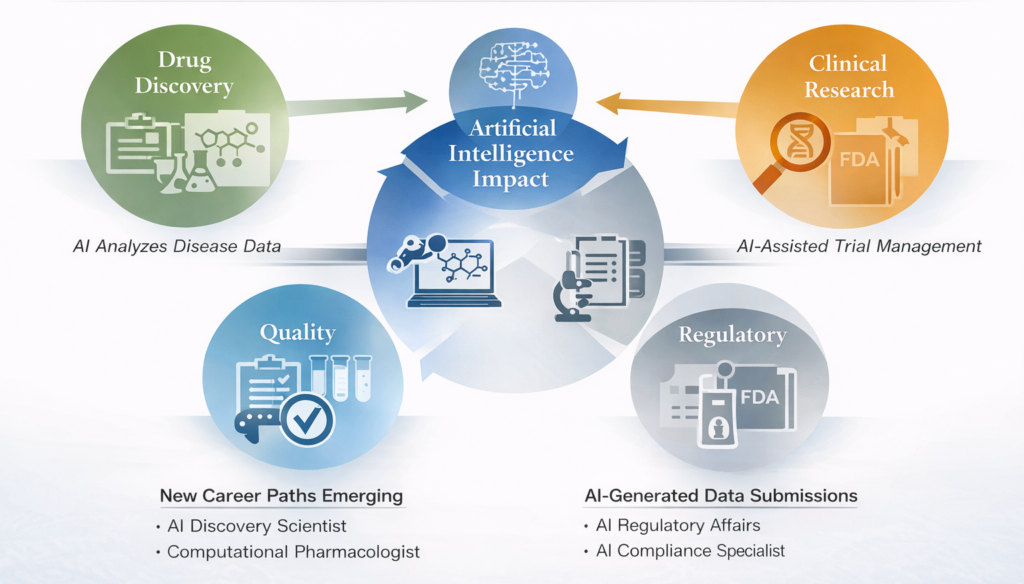
1. New Career Paths Are Emerging
Some roles are new, while others are evolving:
- AI-supported drug discovery roles
- Computational pharmacology positions
- Clinical data analysis roles
- AI-focused quality and validation specialists
- Regulatory professionals handling AI-generated data
These roles require scientific understanding, not just technical skills.
2. Traditional Roles Are Becoming Smarter
- Quality Control: QC teams now work with digital systems and automated trend analysis rather than manual data review alone.
- Quality Assurance: QA professionals increasingly focus on system validation, data integrity, and compliance for AI-supported tools.
- Clinical Research: Clinical teams use AI to improve patient selection, trial design, and data monitoring.
- Regulatory Affairs: Regulatory roles involve explaining how AI tools were validated and how their outputs were controlled.
Who Can Work in AI-Driven Pharma Roles?
AI-driven roles are open to many backgrounds:
- Pharmacy graduates
- Life science and biotechnology students
- Clinical research professionals
- QA and regulatory professionals
- Researchers with strong scientific foundations
Coding is not mandatory for most roles. Understanding how AI fits into pharma workflows is often enough.
Skills That Will Help You Grow
Pharma professionals who want to stay relevant should focus on:
- Basic understanding of AI concepts
- Drug discovery and development workflows
- Data interpretation skills
- Clinical trial fundamentals
- Documentation, validation, and compliance principles
These skills strengthen both scientific confidence and career flexibility.
Challenges that Still Exist
AI is not perfect, and responsible use is essential.
- AI systems depend on data quality
- Some models are difficult to explain
- Regulatory expectations continue to evolve
- Ethical and bias concerns must be managed
Recognizing these limitations builds trust and credibility.
Will AI Replace Pharma Professionals?
No.
AI will reduce repetitive tasks and improve efficiency, but it still depends on human judgment, ethics, and experience. Professionals who understand both science and technology will remain essential.
Final Thoughts
AI-discovered drugs entering human trials represent a meaningful shift in how medicines are created. This change improves research efficiency and opens new opportunities for professionals who are ready to adapt.
For readers, students, and working professionals, understanding this shift is not about chasing trends—it is about staying informed, confident, and prepared for the future of pharmaceutical science.
Frequently Asked Questions
Q. Are AI-discovered drugs tested properly?
Yes. They follow the same clinical testing standards as traditional drugs.
Q. Do regulators accept AI-generated research?
Yes, provided safety, quality, and validation requirements are met.
Q. Can pharmacy students enter this field?
Yes. Many roles value pharmaceutical knowledge combined with AI awareness.
Q. Is this a short-term trend?
No. AI adoption in pharma is expected to grow steadily.