
 by
by The Nipah virus (NiV) is considered one of the most dangerous emerging infectious diseases in the world—not because it spreads rapidly like COVID-19, but because of how deadly it can be once transmission occurs. Since its discovery, every Nipah virus outbreak has raised serious public health concerns due to its high fatality rate, lack of a specific cure, and potential to cause severe neurological and respiratory disease.
In 2026, renewed alerts and public discussions about the Nipah virus have once again highlighted the importance of understanding how it spreads. Transmission knowledge is the most powerful tool we currently have to prevent outbreaks, protect communities, and avoid unnecessary panic.
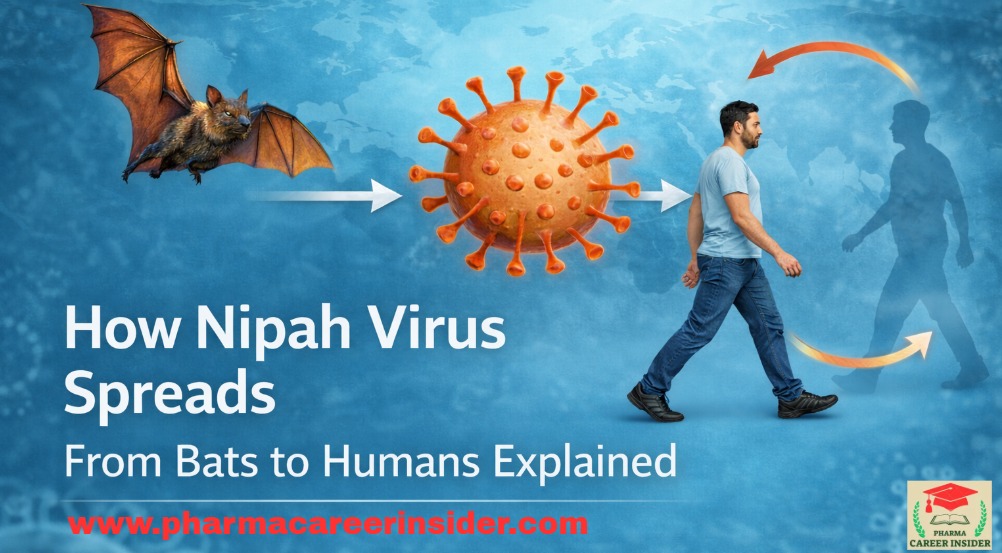
In this article, we explain exactly how the Nipah virus spreads—from fruit bats to humans and between humans—using medically accurate, easy-to-understand explanations.
👉 For a complete overview of symptoms, treatment, and prevention, read our detailed guide:
Nipah Virus Outbreak 2026: Symptoms, Causes & Prevention
What Makes the Nipah Virus Highly Dangerous?
Unlike many common viral infections, the Nipah virus is classified as a zoonotic virus, meaning it originates in animals and can spill over into humans. What makes Nipah particularly dangerous is a combination of factors:
- High fatality rate (40–75%) in reported outbreaks
- Ability to cause brain inflammation (encephalitis)
- Potential for human-to-human transmission
- No approved vaccine or specific antiviral treatment
Although the Nipah virus does not spread easily through casual contact, even a small transmission chain can lead to severe illness and death, which is why health authorities treat every suspected case seriously.
Natural Reservoir of Nipah Virus: Fruit Bats
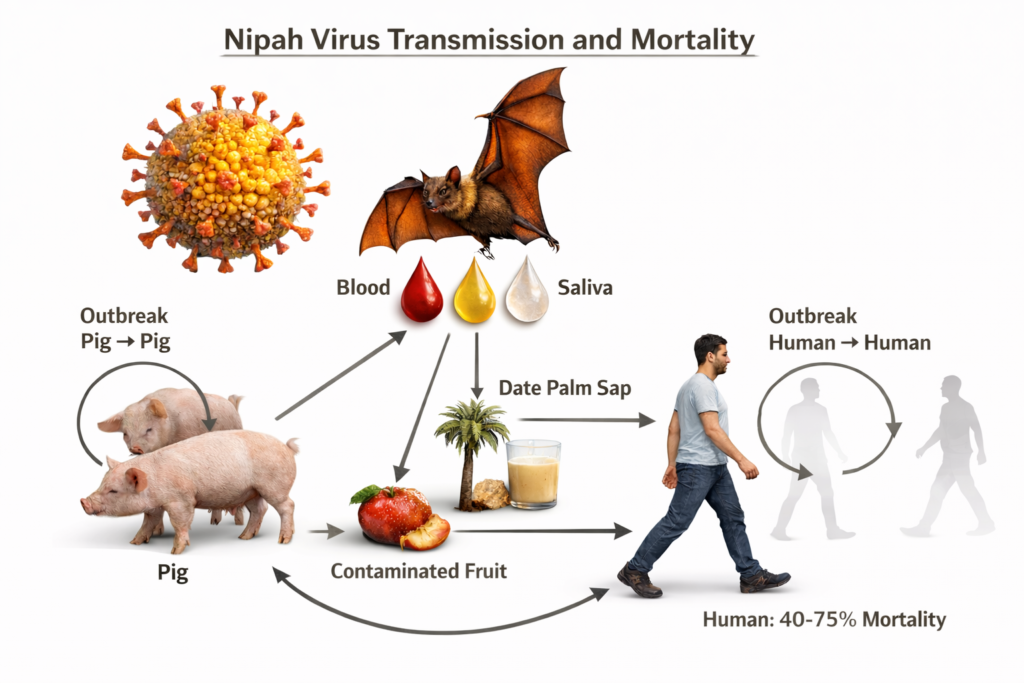
- Why Fruit Bats Are Central to Nipah Virus Spread: The natural reservoir of the Nipah virus is fruit bats of the Pteropus genus, commonly known as flying foxes. These bats carry the virus without showing symptoms, allowing it to circulate silently in nature. Fruit bats shed the Nipah virus through Saliva, Urine, and feces. Because bats often feed on fruits and drink sap from trees, they can contaminate food sources that humans later consume.
- Why Bats Do Not Get Sick: Fruit bats have unique immune systems that allow them to host many viruses without developing illness. This makes them ideal long-term carriers, but it also increases the risk of spillover events when humans come into contact with contaminated materials.
How Nipah Virus Spreads From Bats to Humans
This is the most common starting point of Nipah virus outbreaks.
1. Transmission Through Contaminated Fruits and Date Palm Sap
One of the best-documented transmission routes involves raw date palm sap, especially in parts of South Asia.
How it happens:
- Fruit bats lick date palm sap collection pots at night
- Their saliva or urine contaminates the sap
- Humans consume the sap without boiling it
Similarly, the Nipah virus can spread through:
- Bat-bitten or fallen fruits
- Fruits contaminated with bat saliva or urine
Eating such contaminated food allows the virus to enter the human body through the mouth or digestive tract.
2. Transmission Through Infected Animals (Intermediate Hosts)
In some outbreaks, animals act as intermediate hosts between bats and humans.
Example:
- Bats infect pigs through contaminated fruit or feed
- Pigs amplify the virus
- Humans become infected through close contact with pigs
This route was responsible for the first Nipah outbreak in Malaysia (1998–1999), primarily affecting pig farmers and slaughterhouse workers.
Human-to-Human Transmission of Nipah Virus
Although less common than bat-to-human transmission, human-to-human spread is possible and dangerous.
How Nipah Virus Spreads Between Humans
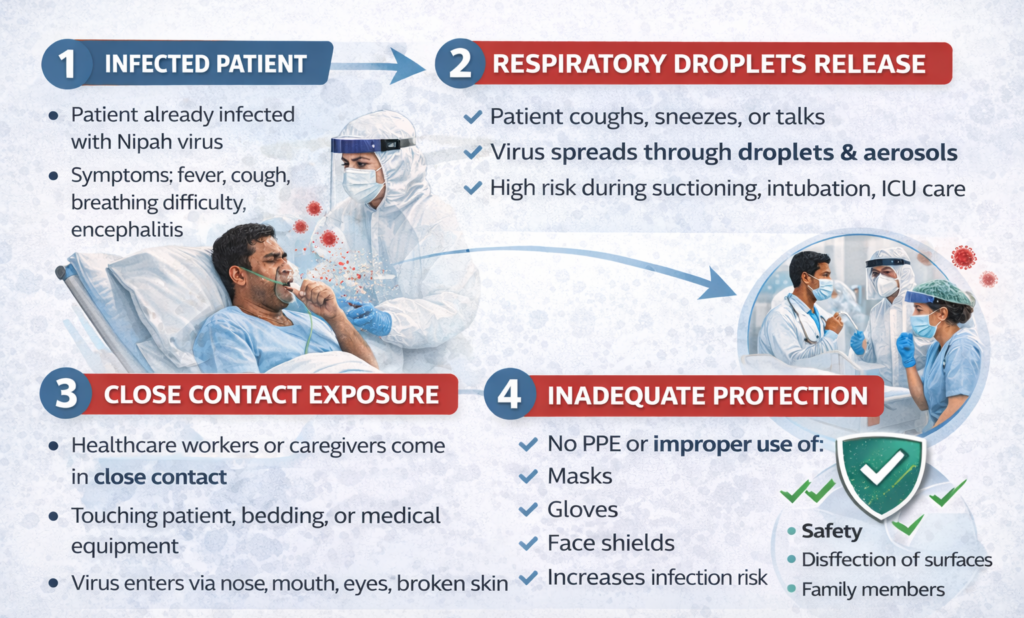
Human-to-human transmission occurs through:
- Close physical contact
- Exposure to respiratory secretions
- Contact with body fluids (blood, saliva, urine)
- Caring for infected family members
- Unprotected exposure in healthcare settings
Healthcare workers and caregivers are at higher risk if proper infection control measures are not followed.
Important Clarification: Nipah Virus Is NOT Airborne
A critical point of clarity:
Nipah virus does NOT spread through the air like measles or COVID-19.
Transmission requires close and direct contact, which limits large-scale community spread but increases risk in hospitals and households.
Where Is Nipah Virus Transmission Most Likely?
1. High-Risk Regions
Nipah virus outbreaks have been reported mainly in:
- India (Kerala, West Bengal)
- Bangladesh
- Malaysia & Singapore (historical)
- Parts of Southeast Asia
2. Why These Regions Are Vulnerable
Factors include:
- Proximity between humans and bats
- Consumption of raw or unprocessed foods
- Dense populations
- Limited awareness in rural areas
Environmental changes and deforestation may also increase bat-human interactions, raising future risks.
Can Nipah Virus Spread Like COVID-19?
This is one of the most searched questions online. Nipah Virus vs COVID-19: Transmission Comparison
| Feature | Nipah Virus | COVID-19 |
|---|---|---|
| Mode of spread | Close contact, body fluids | Airborne |
| Human-to-human transmission | Limited | Very high |
| Outbreak pattern | Localized clusters | Global pandemic |
| Fatality rate | Very high | Lower |
Key takeaway:
Nipah virus spreads less easily than COVID-19, but is far more deadly when infection occurs.
How to Break the Nipah Virus Transmission Chain
Stopping Nipah virus outbreaks depends on interrupting transmission pathways.
Key Measures to Prevent Spread:
- Avoid raw date palm sap
- Do not eat bat-bitten or fallen fruits
- Wash fruits thoroughly before consumption
- Maintain hand hygiene
- Isolate suspected cases early
- Use PPE in healthcare settings
- Practice safe caregiving for infected individuals
Even simple preventive actions can dramatically reduce risk.
Why Early Awareness of Transmission Saves Lives
Understanding how the Nipah virus spreads allows:
- Faster identification of exposure risks
- Early isolation of suspected cases
- Protection of healthcare workers
- Prevention of panic through facts
Awareness, not fear, is the strongest defense against the Nipah virus.
Conclusion
Nipah virus transmission follows a clear but dangerous pathway—from fruit bats to humans and, in some cases, between humans. While the virus does not spread easily through the air, its high fatality rate and lack of a cure make prevention critical. By understanding how the Nipah virus spreads and following evidence-based safety measures, communities can reduce risk, protect vulnerable populations, and prevent future outbreaks.
Frequently Asked Questions (People Also Ask)
Q1. How does the Nipah virus spread to humans?
Answer: Nipah virus spreads to humans mainly through contaminated fruits, raw date palm sap, infected animals, and close contact with infected persons.
Q2. Can the Nipah virus spread from person to person?
Answer: Yes, the Nipah virus can spread between humans through close contact with respiratory secretions or body fluids, especially in healthcare or household settings.
Q3. Is the Nipah virus airborne?
Answer: No. There is no evidence that the Nipah virus is airborne. It requires close physical contact for transmission.
Q4. Can you get the Nipah virus from fruits?
Answer: Yes. Eating fruits contaminated by bat saliva or urine, especially fallen or partially eaten fruits, can transmit the Nipah virus.
Q5. Why are bats linked to the Nipah virus?
Answer: Fruit bats are the natural reservoir of the Nipah virus. They carry the virus without illness and can contaminate food sources consumed by humans.
